
Rajneesh Gupta presents all the fascinating career numbers of players in the World Cup.

The 89th Annual Academy awards saw some touching speeches. Here's a look at some of the best ones.

AB de Villiers blasted a quickfire half-century to propel South Africa to a mammoth total against Afghanistan in the ICC World T20 Super 10 Group 2 match at the Wankhede stadium in Mumbai, on Sunday. Images from the match.

Sri Lanka won the just-concluded Asia Cup, but none of their players figure in Srinivas Bhogle and Purnendu Maji's most valuable player index. Check it out.

India's T20 World Cup challenge has ended. But it is likely that Virat Kohli (MVPI of 338) will go on to become the tournament's most valuable player because he enjoys a lead of 109 runs over second-placed Joe Root (229).

India's batting sensation Virat Kohli, named player of the tournament, is also the most valuable player of World T20 2016. With a fifty and two wickets, England's Joe Root is just behind him.


As we write this we still await the crucial India-Australia knock-out in Mohali. But India's individual performances in the T20 World Cup so far haven't been truly impressive. A look at the most valuable player index (MVPI) table reveals that there's no Indian player in the top 20. MVPI merges a player's batting + bowling + fielding performance into a single 'run equivalent'. The formula to compute the MVP is devised to reward batsmen who score runs at a high strike rate, bowlers who take wickets at low economy rate and fielders who field the best (take a lot of catches and participate in run-outs). Since this is a relatively low scoring tournament we have assumed a team's par score to be 150, and each wicket to be worth 15 'runs'. It isn't a surprise that players from New Zealand dominate the rankings so far, although Joe Root tops the table after his 83 in 44 balls against South Africa.

As the top 10 teams prepare to battle for the World T20 crown, Rajneesh Gupta breaks down each squad's T20 performance and their showing in previous editions of the event.
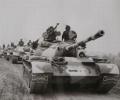
The 1965 war teaches us that war by escalation is a real possibility. Despite clear threats, Pakistan never believed that India will ever cross the international border. In the age of nuclear deterrence, this failure to deter Pakistan is the central lesson of 1965, says Colonel Anil Athale (retd).
